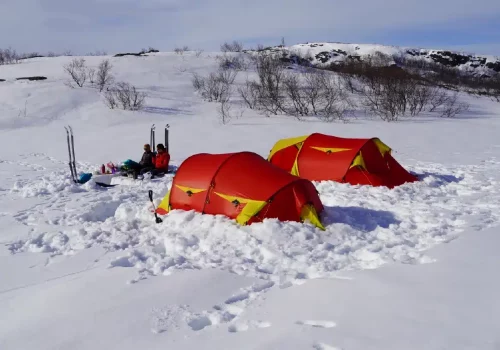


How the week is structured
This week is designed as a step-by-step introduction to winter travel. You start with the basics and gradually build confidence as you spend more time outside and in camp.
Each day combines practical learning with real experience in Arctic conditions, always with guidance and support from the team. The focus is not on performance, but on understanding simple systems, feeling comfortable in the environment, and enjoying the process of learning something new.
Day 1 — Arrival & getting started
Theme: Orientation, mindset, and systems thinking
- Welcome briefing & expectations
- Personal kit check + setup guidance
- Intro to polar clothing layering & moisture control
- Understanding cold-weather physiology
- Stove intro (theory only)
- Evening: journaling & personal expedition intention
Practical Sessions
- Layer drills
- Pack set-up & pulk intro
- Safety brief: frostbite, hypothermia, cold injuries
Mindset
Adventure performance starts with systems — not strength.
Day 2 — Learning to move in winter
Theme: Efficient travel on skis with pulk
- Ski introduction & balance
- Movement patterns with pulk
- Pacing & energy control
- Break systems (short, tactical, no faff)
- Introduction to route planning
Drills
- Slow-speed control
- Kick-glide rhythm
- Transition drills — gloves on always
Evening Workshop
- Clothing drying systems
- Food for cold environments (snacking discipline)
Key Learning:
Speed is nothing — consistency is everything.
Day 3 — Your first snow camp
Theme: First camp, build systems
- Travel to camp location
- First camp setup with coaching support
- Tent anchoring & snow work
- Cooking routines + fuel safety
- Water production systems
- Night checks & tent duties
Mindset Focus
- Team communication protocol
- Decision language: “safe/unsafe”, “go/no-go”
Day 4 — A full day outside
Theme: Applying fundamentals under mild stress**
- Morning tent routine & breakdown timing challenge
- Longer ski day with pulk
- Tactical break discipline (no-faff rule)
- Snow reading & safe terrain awareness
- Optional snow shelter intro (demo)
Skills
- Micro-navigation
- Wind management
- Layer changes on the move
Evening
- Compression drill: drying clothes, gear reset
- Group reflection: what changed under fatigue?
Day 5 — Building confidence & independence
Theme: Students lead routines**
- Route planning (student-led navigation)
- Travel to new camp
- Camp build with instructor oversight only
- Hot-fuel management check
- Weather briefing & threat assessments
Performance Mindset
Act like you’re alone — but communicate like a team.
Day 6 — Practice & problem solving
Theme: Simulated challenges**
Scenarios may include:
- Stove malfunction
- Cold stops & rapid layer strategy
- Lost glove drill
- Binder-strap failure / improvised fixes
- Hypothetical frostbite response discussion
Movement Challenge
- Navigation in lower visibility
- Energy conservation strategies
Evening
- Debrief: what systems worked?
- Personal skills audit
- Solo tent routine challenge
Day 7 — Return & wrap-up
Theme: Reflection & next steps**
- Final ski out
- Kit clean, dry, repack systems
- Individual feedback & development plan
- Lessons learned + performance mindset review
- Gear maintenance workshop
- Intro to next steps (Greenland progression / solo mindset)
Build confidence and practical skills for winter travel & camping
By the end of the week, you will understand how to move and live comfortably in winter conditions. The focus is on simple, reliable systems that help you stay warm, organized, and in control, rather than relying on toughness or prior experience.
Throughout the camp, you learn by doing. Step by step, you build routines that make winter travel feel more natural, from managing your clothing and equipment to working together as a group in changing conditions. The goal is to leave with practical skills, clear routines, and the confidence to travel safely and enjoy time outdoors in winter.
During the week, you will learn:
- Moving on skis with a steady and comfortable pace
- Managing clothing and staying warm and dry
- Setting up and living in a snow camp
- Using stoves safely and managing fuel
- Basic navigation in winter terrain
- Making simple, safe decisions in changing conditions
- Working as a team and communicating clearly
- Building routines you can rely on in the cold